
Two new books
This past winter brought publication of two books of mine, and my friends at Currentpub.com warmed me up by relaying questions about one of them and asking me about the relevance of the other.

INTERVIEW: Pivot Points
Marvin Olasky | March 14, 2024 1 Comment (Edit)
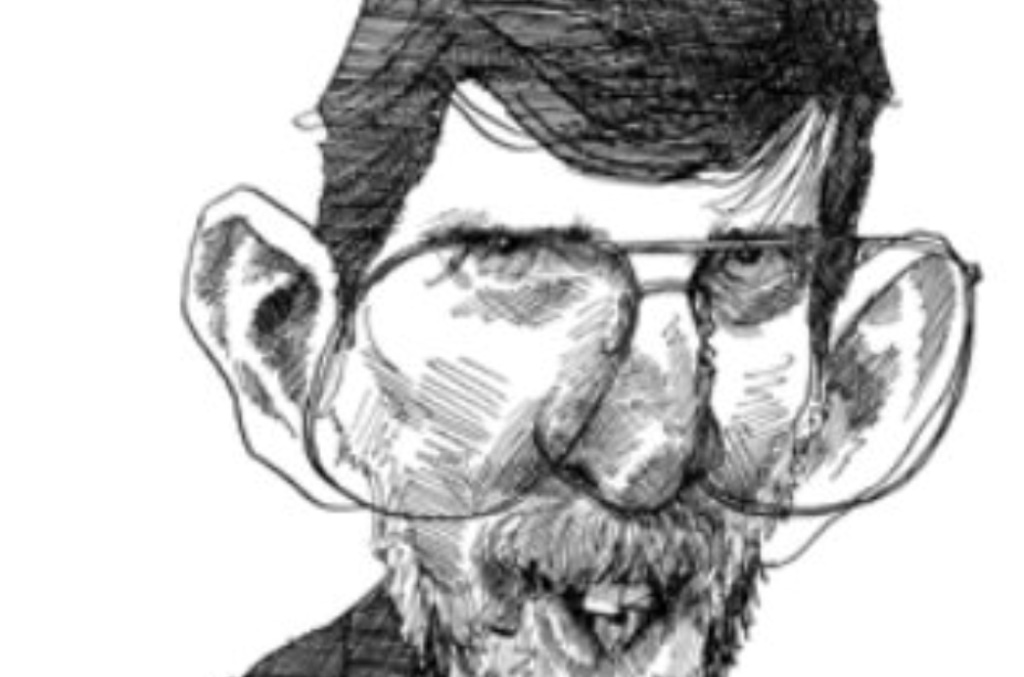
One of the architects of “compassionate conservatism” takes a long look back
In the interview below, Marvin Olasky responds to questions from early readers of his just published memoir: Pivot Points: Adventures on the Road to Christian Contentment, a Memoir. P&R Publishing, 2024. 200 pp., $17.99
How do you define “pivot points”?
Like forks in the road, but we have multiple alternatives, not just two. God throws challenges at us that prompt changes of directions, so we should not fear them. The book title could have been “Long Shots” because I’ve worked on some local church and school causes that succeeded, but some big national ones (reforming journalism, advancing compassionate conservatism) that mostly did not—all part of trying and learning.
What drew you to atheism and communism at Yale?
I became an atheist because the Judaism of my childhood seemed to me like a bagel, with no center except what seemed to me empty rituals. The Vietnam War pushed me towards communism. Underlying those surface reasons was an arrogant belief that I was smarter and more willing than others to do what was necessary to bring about a socialist paradise. As a Christian I have much more respect for Judaism than I did before.
What was it like to bicycle from Boston to Oregon in 1971?
It was hard at first, but after the roller coaster hills of upstate New York, the Rockies weren’t hard, and they are beautiful. Downhills, without braking, were thrilling, and that’s also a metaphor for life. One sidelight: The U.S. didn’t have as much homelessness as it does now, which meant it was fine to camp in a small tent in a city-center park without being run off.
What moved you to consider Christianity?
A Hemingway character explains how he went bankrupt: “Gradually, then suddenly.” I became a Christian the opposite way. In 1973 a radical spiritual experience left me believing in the existence of a God of some kind. I quickly resigned from the Communist Party. For the next three years I was a divided soul, writing a dissertation about the western hero—the man willing to lay down his life in pursuit of justice—but pursuing personal pleasure in a college environment. On my own I couldn’t have brought those two selves together.
Did you decide on a reading program to learn about Christianity?
Hardly. God was in charge. To get a Ph.D. at the University of Michigan I needed a good reading knowledge of a foreign language, and slowly went through a copy of the New Testament in Russian that a friend “just happened” to give me. I also had to teach whatever course was assigned to me. None of the professors wanted to teach early American literature, so that was my assignment, even though I had never studied it. I had to spend a summer immersing myself in Puritan sermons. God’s Word and the words of long-dead preachers gradually affected my thinking.
How did you come up with the concept of compassionate conservatism?
I professed faith in Christ in 1976 and, during the next thirteen years of Bible reading, kept seeing all the passages about caring for the poor. I became a professor at The University of Texas at Austin in 1983 and gained tenure in 1987. That freed me from having to write academic journal articles and provided the opportunity to research whether nineteenth-century Christians, trying to apply what the Bible says about helping the poor, had insights that we, in our more secular culture, have lost. Might it be possible to rally conservatives to stop complaining about welfare spending and come up with an alternative based in biblical compassion, “suffering with” those in need?
How did you get connected to the Bush administration?
Newt Gingrich, who became Speaker of the House of Representatives in 1995, liked The Tragedy of American Compassion, the book I wrote based on that historical research, so I commuted from Austin to Washington for a year of work on welfare reform. Then Governor George W. Bush, who lived a mile away from my university office, had a small political crisis when one of his bureaucrats tried to close down a Christian group, Teen Challenge. I was able to help out a little. We met occasionally after that, and he made “compassionate conservatism” the theme of his presidential campaign.
How did your twenty-nine years as editor and editor-in-chief of World affect your thinking about journalism?
Leading a news magazine forced me to apply what academic research had taught me. Journalists always have to decide what to cover and how to cover it: How do you avoid demonizing those with whom you disagree? Over the years my wife and I trained many young journalists to emphasize street-level reporting over suite-level commentary. One of our slogans was “sensational facts, understated prose.” Don’t scream at readers, even though that might mean more clicks.
How did your column in 2016 that Donald Trump was unfit to be president lead to your resignation?
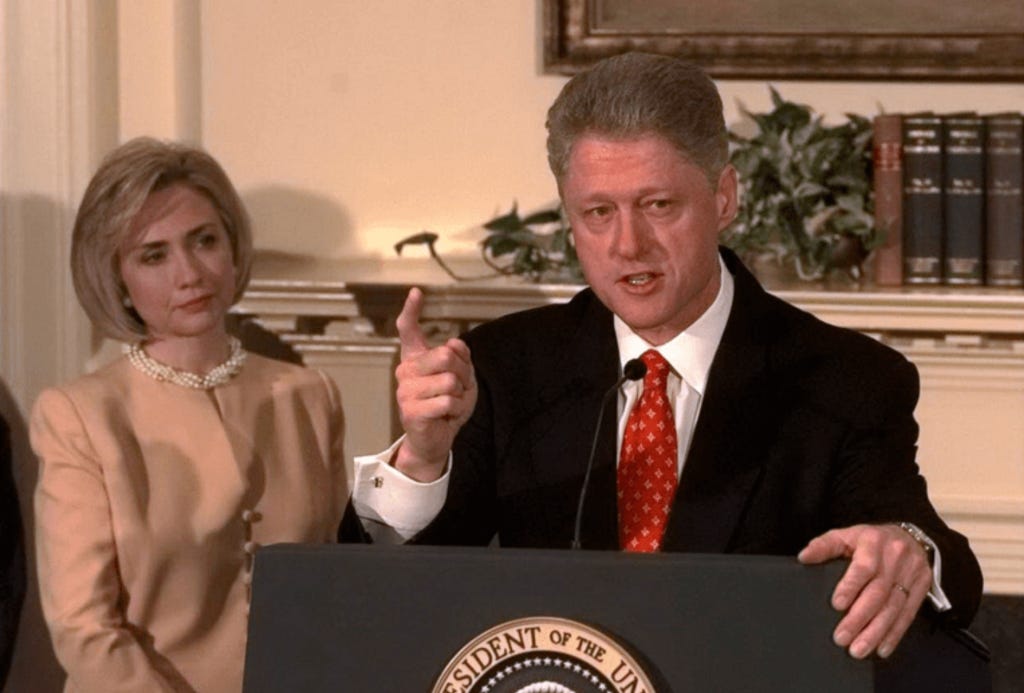
In 2016, during a long plane flight home from Australia, I had all night to recall how evangelicals in 1998 (and World particularly) declared Bill Clinton unfit to be president after his affair with a White House intern. The new question was whether evangelicals—and World specifically—would look the other way concerning Donald Trump. The other senior staffers and I could not in good conscience do that: Our cover story said he was unfit to be president. We never retracted that, much to the chagrin of some readers and some on the business side of World. God was kind to give us another five years after that.
What did you learn from the unexpected pivots that God has taken you through in recent years?
God is sovereign over all things, so pivot points forced me to trust Him more. Half a century ago I left Marxism and thought the most serious opposition to Christ came from the far left. Recent events have shown the far right is equally dangerous. In body and soul, in life and death, we belong to God, not to ideology and idolatry.
How would you counsel others who are experiencing their own significant pivot points?
Do not fear. Moment by moment we can put ourselves first, or our organization first, or God first, glorifying and enjoying Him as best we can in our fallen ways. The biblical mission is more important than a career or an organization. God gives us adventures, I mess up, He bandages our wounds.
What’s your “retirement” like?
An alternative to playing golf is writing books, so my American history book that came out last month, Moral Vision, and this memoir, Pivot Points, were fun to do. I write for Discovery Institute a weekly column on homelessness and a monthly Olasky Books newsletter, eight essays a year for Acton Institute, a monthly column about Christian books for Religion Unplugged, and occasional short pieces for Current and The Dispatch. Most important, Susan and I are in the forty-eighth year of a great marriage, with four children and six grandchildren, and I’m an elder at Grace and Peace Austin.
Keep Calm and Carry On?
Marvin Olasky | February 13, 2024 Leave a Comment (Edit)
Olasky’s new book makes a radical claim: Character (still) counts
Today, Simon & Schuster publishes a book of mine: Moral Vision: Leadership From George Washington to Joe Biden. It’s a character-driven introduction to American history through studies of nineteen leaders: presidents, almost presidents, a tycoon, a crusading journalist, and even a leading nineteenth-century abortionist. The overall arc opposes today’s textbook tendencies: As big economic and demographic waves roll in, students are learning to submerge the role of individuals beneath history’s tide.
Moral Vision grew out of my sense that history is more than statistics, economics, and group identities. Character counts. Views that grow out of religious belief influence how leaders set political goals, deploy power, and understand public service. Christians aspire to follow Jesus’ teaching in Matthew 20 that “whoever would be great among you must be your servant.” Good leaders aspire to serve the public, not their egos. Often presidents are surrounded by flatterers, but a president who aspires to be a public servant needs to be a person of character.
Almost half a century ago novelist Larry McMurtry wrote, “One seldom, nowadays, hears anyone described as ‘a person of character.’ The concept goes with an ideal of maturity, discipline, and integration.” The absence McMurtry described is even more evident now—yet the character of leaders has made a huge difference in American history. Had George Washington not gained great respect, the American experiment probably would have failed. Had Abraham Lincoln not been resolute, Southern states would still have rebelled and the North would probably have said “good riddance.”
Moral Vision in part expands on my earlier book, The American Leadership Tradition (1999). I’ve added lots of material on race relations to chapters about Washington, Thomas Jefferson, Andrew Jackson, Henry Clay, Lincoln, John D. Rockefeller, Grover Cleveland, both Roosevelts, Woodrow Wilson, John F. Kennedy, and Bill Clinton. Chapters on Harry Truman, Newt Gingrich, Donald Trump, Joe Biden, Madame Restell, and the lead-up to the Trail of Tears are new. Back-to-back chapters on Booker T. Washington and Ida B. Wells show their contrasting views of how to make the United States a less imperfect union.
As I think about Moral Vision in light of our current presidential primary results, I’m confident about the narrative and relevance of twenty-nine of its chapters, yet unsure regarding chapter thirty. In it I quote Ralph Reed, who in January 1999 told CNN viewers, “We desire leaders of character. We desire leaders who can set a moral example for our children.” Reed told ABC viewers that Clinton’s presidency was “enormously frustrating for people who are hungering for moral leadership at the highest level of government.” Yet Reed started working behind the scenes for Donald Trump in 2011 and was instrumental in getting Trump elected in 2016.
What now? Reed acknowledges that when it comes to evangelicals, Trump’s “life hasn’t exemplified our faith [but he] has fought for us.” As a result, evangelicals have “a moral obligation” not only to back him but do it “enthusiastically.” But those making a pact with Trump would have done well to keep in mind the childhood triumph he bragged about in his best-selling book, The Art of the Deal: “borrowing” his younger brother’s blocks and then gluing them together to build a childhood Trump Tower. Now he has borrowed the credibility endorsers gave him and babbled his way to leads in public opinion polls.
For twenty-nine years the reporters of World heard me say “The sky isn’t falling because God holds up the sky.” In that spirit, my last chapter doesn’t scream or rant. It suggests that we not vote for Trump, and—as the Brits say— “keep calm and carry on.” It suggests that our political system, with its hollowed-out parties, is not moving us safely through the valley of the shadow of disaster. But, eight months after writing it, I wonder if that last chapter is too calm. The other chapters show how God has been merciful to the United States in raising up our political princes. We’ve had some disappointments in the Oval Office but not insanity. The next four years may be our hardest since 1861-1865.
Now we know, if we had forgotten, that our only hope is in the Lord.
Marvin Olasky was editor and editor-in-chief of World from 1994 to 2021.
Marvin- I really appreciate the move from “gradually” to “suddenly.” I think this quote really sums it up. Thanks for sharing.
Character counts. How indeed rare that comment is in this odd age. Thank goodness we have been blessed with Mr. Olasky, who character does indeed count. Thank you, Marvin, and enjoy time with your bride.